Turn excess income into wealth
Nim doesn’t just track your money; it helps you decide what to do with it. If you have surplus income, Nim guides you step by step:
- First, build a safety buffer
- Then allocate into savings and yield
Your AI agent
Spend smarter, save more, and make better decisions with your money, wherever life takes you.
Nim is your personal assistant inside Liminal. Ask questions, get answers, and take action instantly.
No spreadsheets. No guesswork.
Self-driving finance, built around you.
Nim tracks your spending and shows you where money is slipping away, helping you:
Small improvements, compounded.
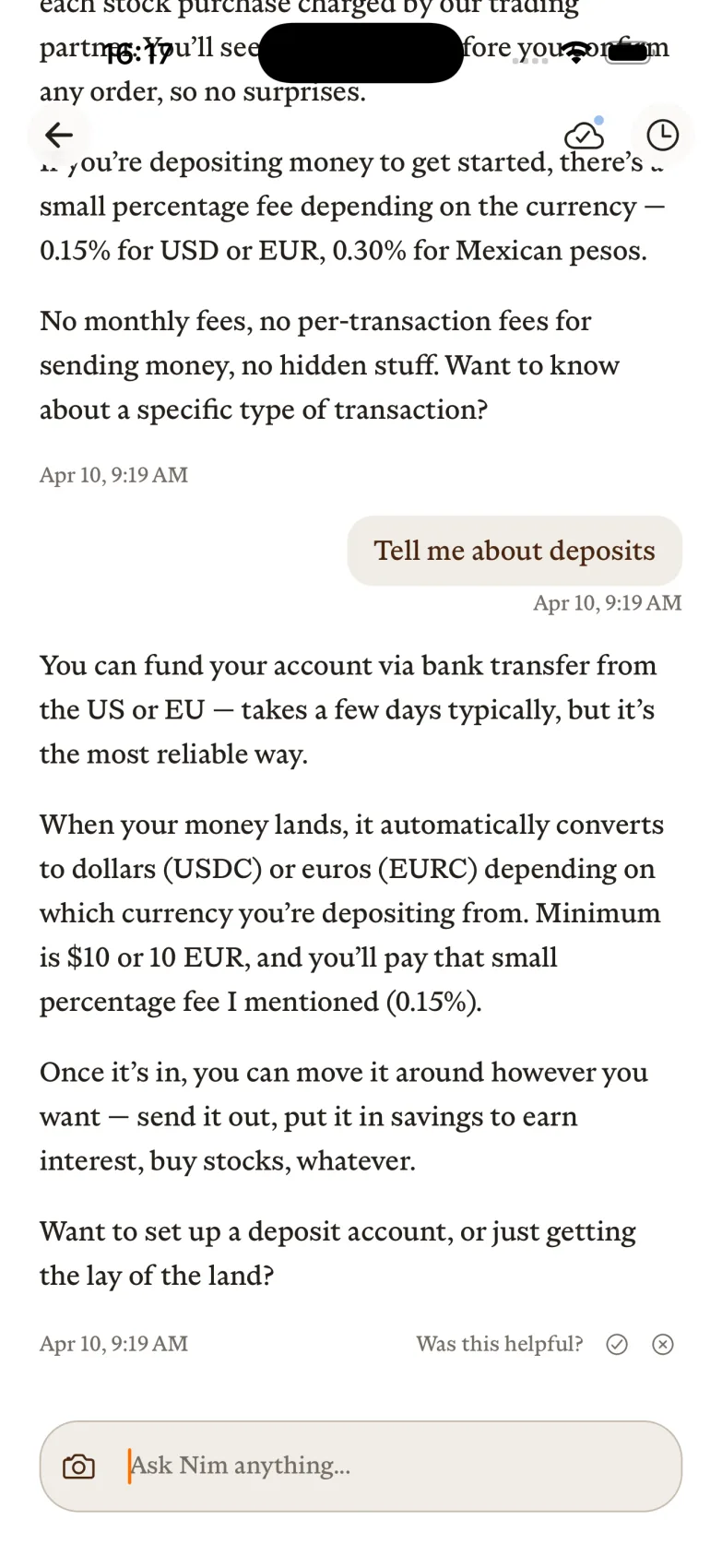
Nim doesn’t just track your money; it helps you decide what to do with it. If you have surplus income, Nim guides you step by step:
Nim doesn’t stop at recommendations; it helps you:
Nim is your personal financial agent inside Liminal, and the distinction that matters is that it acts on your finances, not just talks about them. It analyses your spending and account activity, explains what it finds in plain English, and can execute actions like moving money into savings or moving funds between your currency balances, all through a normal conversation rather than a menu of settings. Because Nim has full context of your activity inside the app, it can proactively flag things like idle cash or a forgotten subscription without you having to go looking.
Nim can track your spending and flag where money is quietly leaking out, manage your savings by finding idle cash and moving it somewhere it earns yield, and allocate funds across your different currency balances depending on what you need. It can also give plain-English advice on the financial decisions you are weighing, from whether to convert currency now or wait, to how much to keep back for the month ahead.
No. A budgeting tool typically shows you what you already spent after the fact, leaving you to decide what to do about it. Nim goes further in both directions: it looks forward as well as back, suggesting where surplus income should go and building an actual plan with savings goals and check-ins, and it can execute the resulting decision, whether that is moving money into savings or moving money across your currency balances, rather than stopping at a suggestion. Budgeting is one input Nim uses, but the output is action.
Yes. Nim can take action directly, from moving money into savings to sending a payment abroad, all without you leaving the conversation to go find the right screen yourself. It does not move money unilaterally, though: Nim surfaces a specific suggestion, like putting an idle balance into your savings pot, and you approve it before anything actually changes. That approval step is what keeps you in control while still letting Nim handle the mechanical part of carrying the action out.
Most finance apps are passive dashboards: they show you balances, categorise past transactions, and leave the decisions and the follow-through to you. Nim combines insight and execution in one agent, so instead of just telling you that you are overspending on subscriptions, it can identify the specific one, explain the cost, and cancel it once you approve. That shift from reporting to acting is what makes it closer to a personal finance agent working on your behalf than a smarter spreadsheet.